Heroes From the Homefront
Little-Known Civilian Heroes of Pearl Harbor

There were numerous heroic actions on the part of military personnel during the Pearl Harbor attack—many of whom we may never know. I’ll highlight some of those known military heroes in my next post.
But this time, I want to introduce you to some of the civilians who performed extraordinary acts of courage during and immediately after the attack.
Since my wife and I have lived here in Hawai’i (mostly on 😉) since 1984, we’ve had the good fortune to meet people who served as civilian defense workers during the war. In addition to shipyard employees, we’ve met engineers, construction workers, drivers, accountants, members of the Women’s Air Raid Defense, and others. We've also heard stories from those who were children during the attack.
It’s hard to imagine the impact the Pearl Harbor attack had on the civilian population. These U.S. citizens were the only Americans to experience an attack on their homes during WWII.
George Walters
On the morning of December 7, 1941, George Walters, a civilian crane operator at Pearl Harbor’s naval yard, was working beside the battleship USS Pennsylvania. He was perched 50 feet above the drydock in the cab of his crane when he spotted incoming Japanese aircraft.
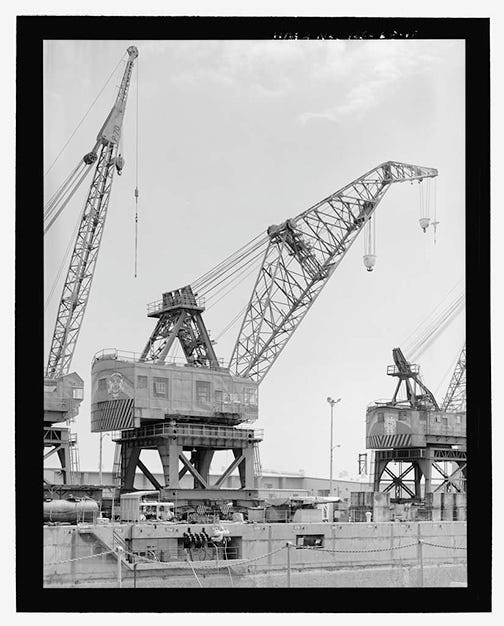
As the attack intensified, Walters acted on instinct. Swinging the crane’s long boom back and forth, he attempted to shield the Pennsylvania from strafing fighters while the ship’s gunners scrambled to return fire. Because the battleship was sitting in dry dock, the gun crews had a limited view—the high concrete walls of the dock blocked much of their line of sight. Walters improvised a solution, using the boom of his crane to point out incoming planes, giving the sailors precious seconds to react.
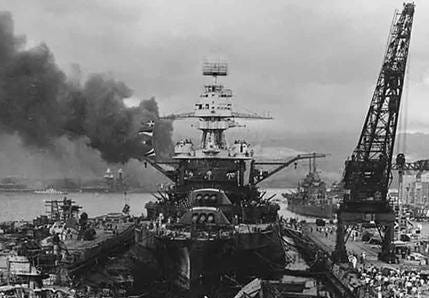
The risks were immense. A 500-pound bomb exploded nearby, damaging the crane and nearly throwing Walters from his perch. The blast left a 17-foot crater close by, but his quick maneuvering of the crane prevented a direct hit. Stunned but still determined, he continued operating the damaged machine until the worst of the attack had passed.
Walters’ quick thinking and courage earned him lasting recognition. Many later credited him with helping save the Pennsylvania, which survived the attack despite being damaged. After the war, Walters continued his career, operating cranes until 1950 and finally retiring in 1966.
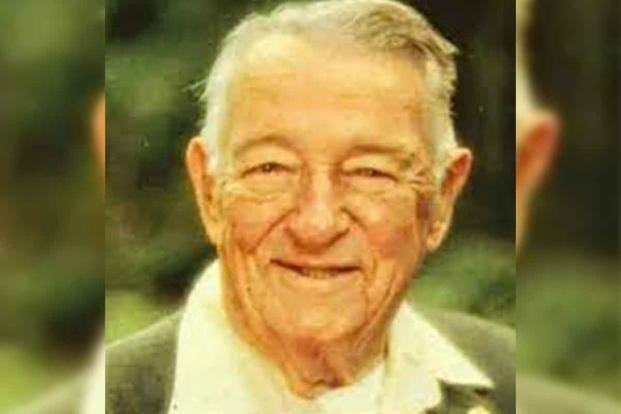
Though he was neither a sailor nor a soldier, George Walters’ actions that morning illustrate the extraordinary ways ordinary civilians became part of the defense of Pearl Harbor. His story is one of resourcefulness, courage, and commitment in the face of sudden danger.
Raymond Ortiz Salsedo
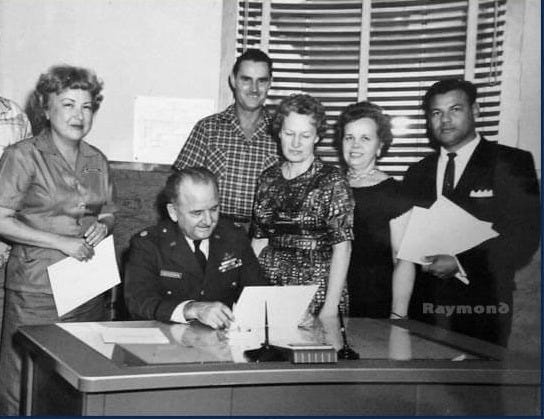
“I was working on top of the dry dock next to the Cassin and Downes destroyers. Without warning, the destroyers exploded. Shrapnel flew past and hit the walls of the shop behind me. There was another battleship in the dry dock and explosions from the destroyers.
“I was gripped with extreme fear and panic. I felt my stomach muscles stiffen and cramp from fright and I couldn’t stand up. There were more explosions from the two destroyers and I was knocked out. When I woke, the attack was still underway. I crawled under a parked train, terrified, then heard my supervisor yell “Ray Ray.” I regained strength, stood up and loaded my gear onto a 40-foot Navy ... boat with a few other men. We headed to the Oklahoma, urgently, knowing people were dying.
“I could hear them screaming.”
This is the first hand account of Raymond, a civilian working as an underwater welder when Japan attacked Pearl Harbor.
“When I reached the Oklahoma, I opened up the areas marked by shop fitters – they had the ship’s blueprints and knew where we could burn to open up the ship. For around five hours, I burned open the Oklahoma, with around 12 people coming out of the burn holes over that time.”
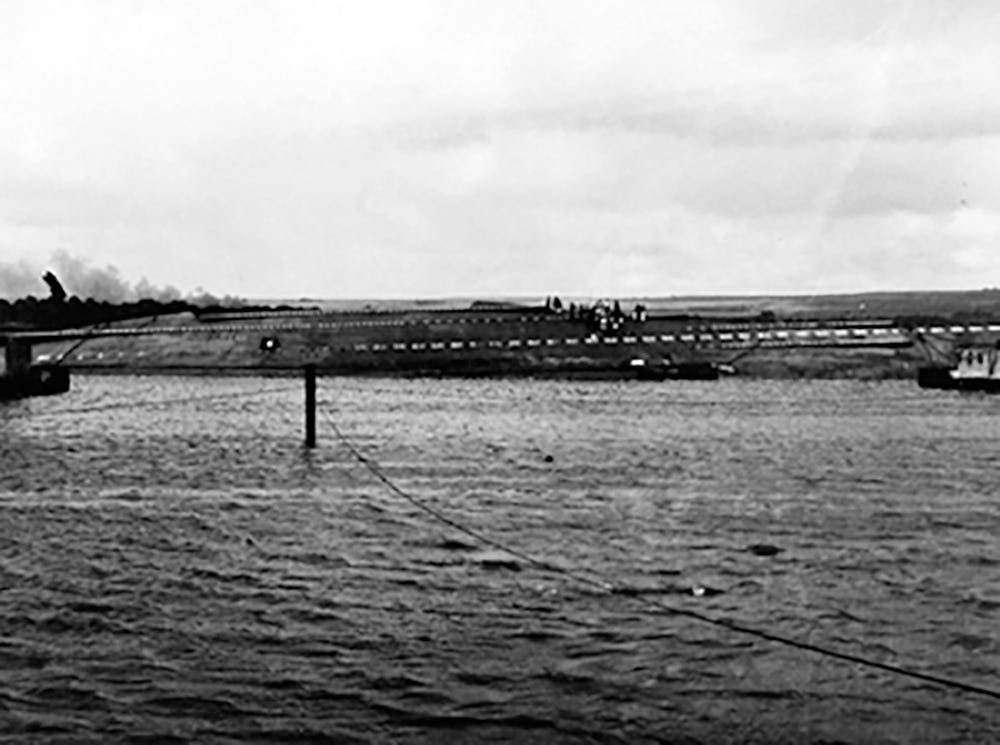
He stayed for three days working nonstop, getting by on adrenaline. When he finally returned to his pregnant wife, she couldn’t believe it. She’d believed him to be dead since he hadn’t returned right after the attack. As with most others under the impression another attack was imminent, Ortiz Salsedo built a deep shelter for her in the back yard to keep her protected.
Ortiz Salsedo spent weeks after the attack burning boats, and took just one day off – a decision that saved his life.
“I took one day off and the man who stepped in to replace me started to burn open a compartment when it exploded, killing three fire watch sailors and himself.”
He continued working on the ships through the raising of the Oklahoma and recalls the process as though he is watching it on a movie screen:
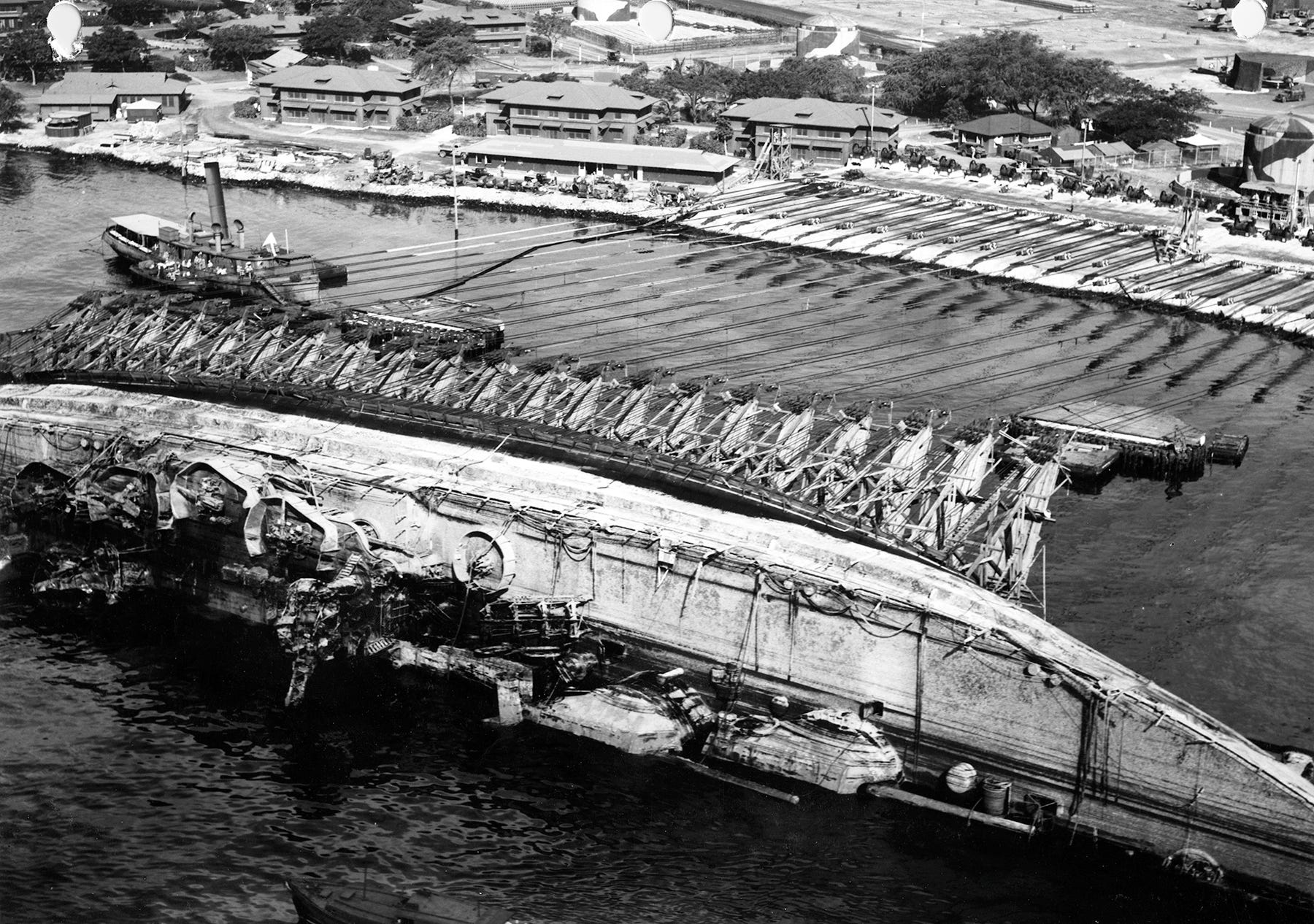
“The Oklahoma was on its side and huge cables with winches on the dock were used to pull the ship upright at a rate of about an inch per hour. I went from compartment to compartment burning holes to allow all the water to flow to the location of the pumps. It was a big job. As the ship slowly came up, I patched the holes and pumps took the water out. At a certain point the compartments were pumped out and sealed and the ship started floating again. That’s when it was towed away for salvage.”
Raymond continued to work at Pearl Harbor as a civilian until 1947, when he moved to Honolulu to work for the Army at Fort Shafter. Following this he moved to California, and worked at Mather AFB and McClellan AFB, retiring at age 55 after 38 years of service.
Honolulu Fire Department
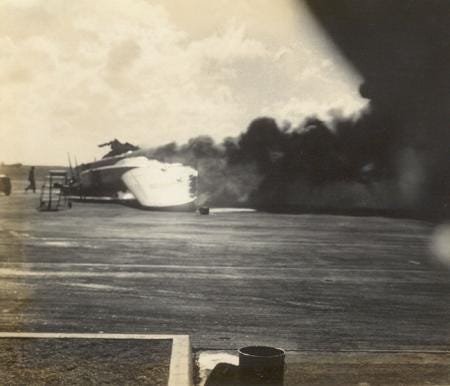
When Japanese aircraft struck Oahu on the morning of December 7, 1941, the Honolulu Fire Department (HFD) was thrust into the middle of the chaos. At 8:05 a.m., minutes after the first bombs fell, Engine Company 6 rushed to Hickam Field, one of the hardest-hit sites.
With the base’s own firefighting equipment destroyed, HFD crews became the only firefighting force available. They battled raging flames even as enemy planes returned, strafing the airfield and exposing them to direct fire.
The work was made harder by broken water mains and damaged equipment. Improvisation became essential. Firefighters drew water from bomb craters and patched holes in hoses and tanks with soap and even toilet paper to keep the pumps running.
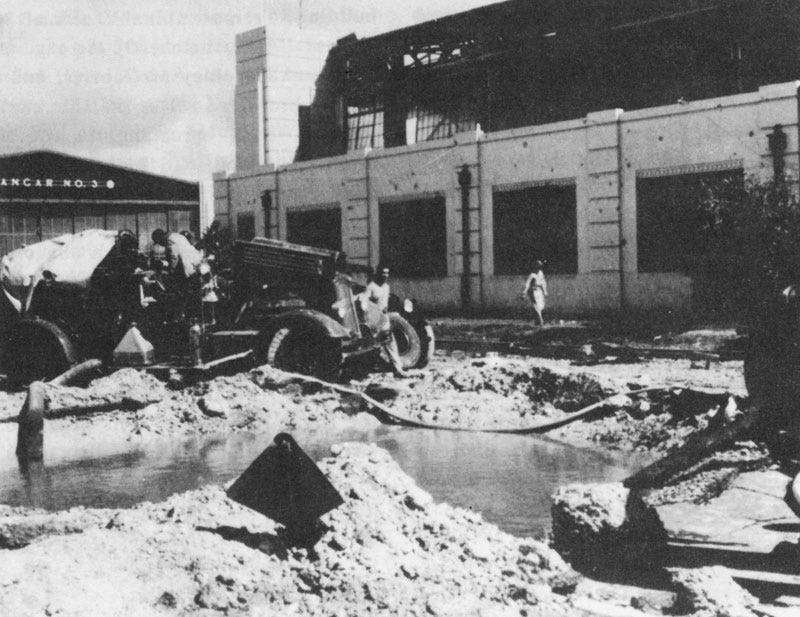
The sacrifice was severe. Captain John Carreira and Captain Thomas S. Macy of Engine 4 and Engine 1 respectively died while battling flames inside the hangar after a Japanese bomb crashed through the roof. Hoseman Harry T.L. Pang of Engine 6 was killed near the hangars by machine-gun fire from a Japanese plane. in action, and six other firefighters were wounded. These nine men remain the only civilian firefighters in U.S. history to receive the Purple Heart.
Beyond Hickam, HFD companies raced to emergencies across Honolulu, extinguishing fires and rescuing the injured in neighborhoods hit by stray bombs and falling antiaircraft shells. All off-duty personnel were recalled, and volunteer crews were organized to meet the overwhelming demand.
For the next two days, firefighters labored without rest, answering calls across the city until finally standing down on Tuesday morning.
The courage and endurance of the Honolulu Fire Department that day highlight the often-overlooked role of civilians during the attack. With little protection, they carried out their mission under fire, saving countless lives and preventing even greater destruction.
Julio DeCastro
When Julio DeCastro, a civilian worker at Pearl Harbor’s naval yard, reached the capsized USS Oklahoma on the morning of December 7, 1941, he heard the frantic tapping of sailors trapped inside. Moments earlier, the battleship had been struck by four or five torpedoes in quick succession, rolling it nearly upside down with more than 450 men still below deck.
DeCastro, a caulker and chipper born in Hawaii, immediately joined the rescue effort. For the next two days, he and fellow yard workers labored almost nonstop in a desperate attempt to cut through the ship’s armored hull.
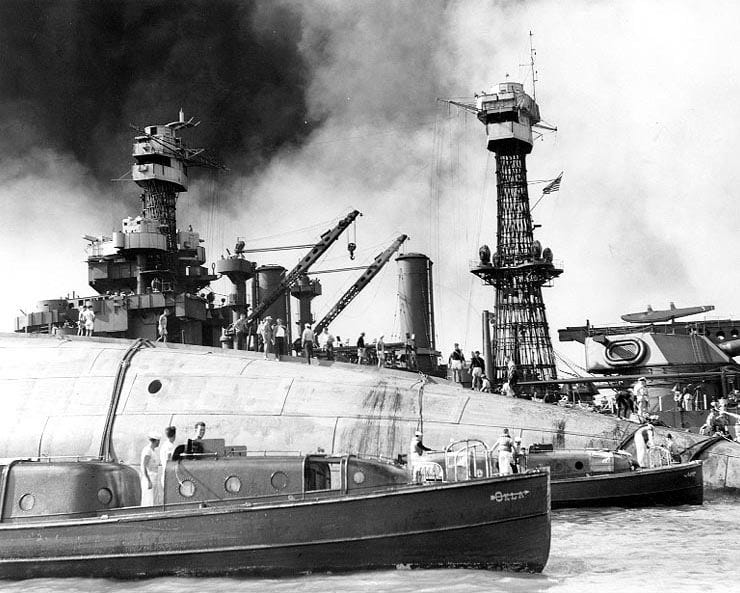
The men brought with them whatever tools they could—blowtorches, pneumatic chipping guns, compressors. At first they tried cutting with torches, but fires broke out inside the compartments. Cork insulation and thick layers of oil-based paint ignited easily, forcing the team to abandon the approach. They turned instead to chipping guns—heavy, pneumatic tools fitted with chisels that hammered away at the steel. It was slow, punishing work.
A breakthrough came when an officer aboard the nearby USS Maryland found a copy of the Oklahoma’s Booklet for General Plans. The diagrams gave rescuers a better sense of the ship’s layout and helped them decide where to cut. Even with the guide, progress was agonizingly slow.
DeCastro later described working under eerie conditions: “The Arizona was still burning. It threw a light on us as we worked. And for about an hour there was antiaircraft firing all over the place. But we kept on working. If the firing got too hot, we’d flatten out against the hull and hope nothing would hit us.”
Eventually the team broke through. Yard worker Joe Bulgo reached inside and began pulling sailors out one by one. When one survivor told him that more men were trapped in an adjoining compartment, Bulgo attacked the bulkhead with his tools, making three cuts before smashing through with a sledgehammer. Ten more sailors crawled to safety.
In the end, 32 men were saved. But of Oklahoma’s crew of nearly 1,400, 429 perished. Navy divers continued to recover remains until June 1944.
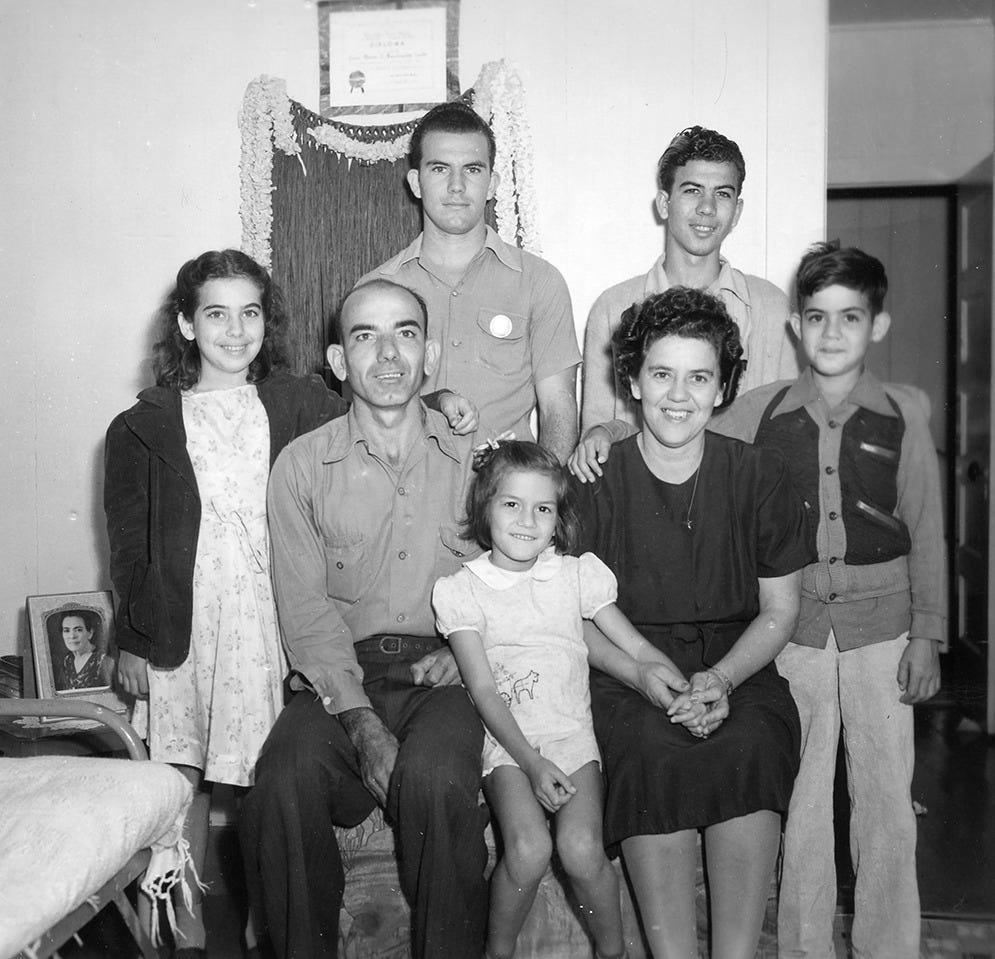
DeCastro was later commended by the commandant of the Fourteenth Naval District for his role in the rescues. He lived quietly in Hawaii until his death in 1984, remembered as a civilian whose determination saved dozens of lives on one of America’s darkest mornings.
Just A Few
There are no doubt dozens of stories similar or even more dramatic than these that were never catalogued. One clear example would be the four members of the McAbe Family killed on their way to the shipyard, in response to an urgent radio message, when a shell penetrated the roof of the 1937 Packard.
David Kahookele, 23, seated on the passenger’s side of the front seat of the Packard, was taken from the vehicle alive, but never made it to the hospital. Seated behind Kahookele was his uncle, Joseph McCabe Sr., 43. Beside McCabe in the back seat was Joseph Adams, 50, McCabe’s first cousin, who owned the Packard. The driver was John Adams, Joseph Adams’ 18-year-old son.
All four men had attended 7 a.m. mass that morning along with family members at St. Ann Parish in Kāne‘ohe, near where the Adams and McCabe families resided. Like hundreds of others that morning, the four riggers from Shop 52 were heeding urgent radio advisories to report to their Pearl Harbor work stations at once.
These men were certainly heroes.
In my next Substack, I’ll be sharing some additional stories of individual bravery, loss, and resilience. Names like Ensign John Finn, the defenders of USS Nevada and others that deserve more than a footnote. I hope to honor them here.
Stay tuned.
And please check out my wife Dorothea N. Buckingham’s Substack, World War II Hawaii: Beaches, Brothels and Barbed Wire, where she tells rich and compelling stories about wartime Hawai’i from the civilian perspective. I guarantee you will learn many interesting facts and be regaled with stories of some of the characters who lived here in Hawaii before and during the War. Dee is an accomplished author, librarian and historian.
Talk about unsung heroes, here they are. Thanks for your research.